

B2B buyers have changed dramatically in recent years. Decision makers no longer rely only on sales representatives to understand products or services. Instead, they research online, compare solutions, and evaluate businesses through websites long before contacting a company. Because of this shift, websites must do much more than simply display information. They must educate, engage, and convert visitors into qualified leads.
This is where B2B Website Strategies become essential. A well structured B2B website helps businesses attract the right audience, deliver valuable information, and guide potential clients toward taking action. In 2026, the most successful websites combine content marketing, persuasive messaging, user experience optimization, and advanced SEO techniques.
In this guide, we will explore practical and modern B2B Website Strategies that help businesses generate more leads, improve engagement, and strengthen search engine visibility. The focus will be on building a content driven website that supports long buying cycles and builds trust with decision makers.
Table of Contents
What Are High Converting B2B Website Strategies?
High converting B2B Website Strategies refer to structured methods used to design, optimize, and manage websites that generate leads and support business growth. These strategies focus on delivering useful information to visitors while guiding them toward meaningful actions such as downloading resources, requesting consultations, or contacting a sales team.
Instead of relying only on promotional content, modern B2B websites prioritize education and value. Visitors often arrive with specific questions or challenges, and they expect the website to provide clear answers.
Several elements work together to create effective B2B Website Strategies, including:
• Strong B2B Content Marketing
• Persuasive Copywriting for Leads
• Structured information architecture
• Search engine optimization using Semantic SEO
• Conversion focused landing pages
• Valuable resources such as guides, videos, and downloadable content
When these elements are implemented correctly, a website becomes more than just a digital brochure. It becomes a powerful lead generation engine that supports long term business growth.
Why Many B2B Websites Fail to Convert Visitors?
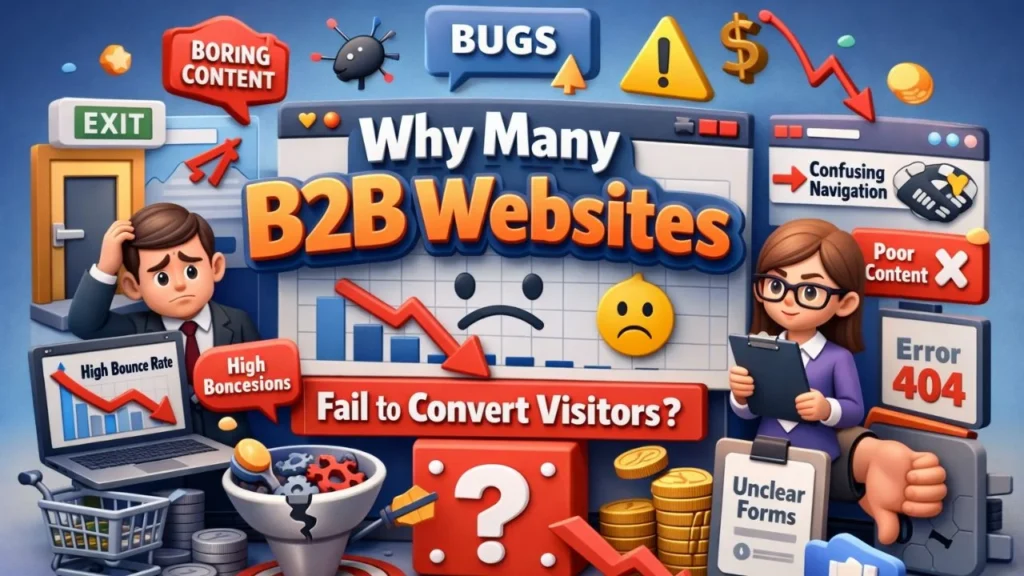
Despite the importance of digital presence, many B2B websites struggle to generate leads. The problem often lies in weak messaging, unclear structure, or lack of useful content.
One of the most common issues is poor Copywriting for Leads. When website content focuses only on describing services rather than addressing customer challenges, visitors quickly lose interest. Decision makers want to understand how a solution can solve their problems, not just what features it offers.
Another issue is the absence of educational resources. B2B buyers typically conduct extensive research before making decisions. If a website does not provide valuable insights, visitors will likely look elsewhere.
Poor navigation and confusing layouts also affect performance. If users cannot easily find relevant information, they are unlikely to stay on the website for long.
By implementing well planned B2B Website Strategies, businesses can solve these problems and create a smoother user journey. Clear messaging, structured content, and helpful resources can significantly improve engagement and lead generation.
Building a Powerful B2B Content Marketing Framework
Content plays a central role in successful B2B websites. Decision makers rely on informative content to evaluate solutions, understand industry trends, and compare service providers. This is why B2B Content Marketing has become a core part of modern website strategies.
A strong content framework helps businesses educate potential clients while building authority in their industry. Instead of focusing solely on sales messages, companies should create content that answers common questions and provides actionable insights.
Key types of content that support B2B Content Marketing include:
• Educational blog articles
• Industry guides and research reports
• Resource libraries
• Product comparison content
• Informative landing pages
These content formats allow businesses to demonstrate expertise and build trust with their audience. Over time, this trust plays a major role in influencing purchasing decisions.
Integrating B2B Website Strategies into content planning ensures that every piece of content contributes to lead generation and search visibility.
Using Copywriting for Leads to Increase Conversions

Words have a powerful impact on how visitors interact with a website. Strong messaging can encourage engagement, while weak messaging can cause visitors to leave quickly. This is why Copywriting for Leads is essential for B2B websites.
Effective copywriting focuses on solving problems rather than promoting features. When visitors feel that a website understands their challenges, they are more likely to explore further.
Several principles can improve Copywriting for Leads:
- Focus on benefits instead of technical details.
- Explain how solutions improve efficiency or reduce challenges.
- Use clear calls to action that guide visitors toward the next step.
- Keep language simple and easy to understand.
Important sections that require strong copywriting include:
- Homepage messaging
- Service pages
- Landing pages
- Lead generation forms
- Resource download pages
When persuasive messaging is combined with effective B2B Website Strategies, websites can guide visitors naturally toward becoming leads.
How Semantic SEO Improves B2B Website Visibility?
Search engines have become much more intelligent. Instead of focusing only on keywords, they analyze the meaning and context of content. This is where Semantic SEO becomes important.
Semantic SEO focuses on building topic relevance rather than repeating the same keywords. It helps search engines understand the relationships between topics, concepts, and user intent.
For B2B websites, this approach offers several advantages. It allows businesses to rank for a wider range of related queries while strengthening overall authority within a specific industry.
Key Semantic SEO techniques include:
- Creating topic clusters around core subjects
- Using internal links to connect related content
- Writing detailed and informative articles
- Including relevant supporting keywords
For example, a website discussing lead generation may also cover content topics such as B2B Content Marketing, Copywriting for Leads, and Video Script Writing. These connected topics help search engines understand the broader theme of the website.
When implemented correctly, Semantic SEO significantly strengthens B2B Website Strategies by improving visibility across multiple search queries.
Content Assets That Drive B2B Conversions

Modern B2B websites rely on diverse content formats to engage visitors. Different users prefer different types of information, so offering a variety of resources improves engagement.
Several content assets are particularly effective for lead generation.
eBook Writing
Educational guides are powerful tools for attracting leads. Through eBook Writing, businesses can provide in depth knowledge about industry challenges, technologies, or strategies. Visitors often exchange their contact information to access these resources, making ebooks valuable lead magnets.
Video Script Writing
Video content continues to grow rapidly in B2B marketing. Clear and informative videos help explain complex concepts and demonstrate solutions. Effective Video Script Writing ensures that videos deliver clear messages while keeping viewers engaged.
Brochure Copywriting
While digital content dominates online marketing, downloadable resources still play an important role. Brochure Copywriting allows businesses to present structured information about their offerings in a professional format that prospects can review later.
Product Description Writing
For companies offering software, tools, or services, clear product information is essential. Effective Product Description Writing explains features, benefits, and use cases in a way that helps buyers understand the value of the offering.
These content formats strengthen B2B Content Marketing and support broader B2B Website Strategies by giving visitors multiple ways to learn about a solution.
Improving Website Structure for Higher Conversions
Even the best content will not perform well if the website structure is confusing. User experience plays a major role in conversion success.
A well-structured website helps visitors find the information they need quickly. Clear navigation menus, organized content sections, and logical page hierarchies improve usability.
Key elements that improve website performance include:
- Simple navigation menus
- Mobile-friendly design
- Fast loading pages
- Clear visual hierarchy
- Well-placed call-to-action buttons
These elements ensure that visitors can move smoothly through the website without frustration. When combined with effective Copywriting for Leads, they significantly improve conversion rates.
Strong website structure is a fundamental part of modern B2B Website Strategies.
Voice Search Optimization for B2B Websites
Voice search continues to influence how users find information online. Professionals increasingly use voice assistants to ask quick questions during research.
To support voice search, websites must adopt conversational content formats. Question based headings and clear answers help search engines deliver quick responses.
For example, a website might answer questions such as:
- What are the most effective B2B website strategies?
- How can a B2B website generate more leads?
- Why is content marketing important for B2B companies?
Providing direct answers improves the chances of appearing in featured snippets and voice search results.
Integrating voice search optimization into B2B Website Strategies ensures that websites remain visible as search behavior evolves.
Expanding Reach With Global Optimization
Many B2B businesses operate in multiple regions. Expanding digital reach requires a structured approach to international visibility.
Global optimization strategies include:
- Creating region specific landing pages
- Optimizing content for multilingual audiences
- Targeting location based keywords
- Understanding regional search behavior
These practices help websites reach new markets while maintaining consistent messaging.
When global optimization is integrated with B2B Website Strategies, businesses can attract international prospects more effectively.
Measuring the Success of B2B Website Strategies

Tracking performance is essential for improving website effectiveness. Without clear data, it becomes difficult to understand which strategies are working.
Key metrics that indicate success include:
- Lead conversion rates
- Organic traffic growth
- User engagement levels
- Time spent on pages
- Content downloads
These metrics provide insights into how visitors interact with a website and whether the content meets their needs.
By analyzing this data, businesses can refine their B2B Website Strategies and continuously improve performance.
Future Trends in B2B Website Strategies
Digital marketing continues to evolve rapidly, and websites must adapt to new technologies and user behaviors.
Several trends are shaping the future of B2B websites.
Artificial intelligence will play a larger role in personalization. Websites will increasingly deliver tailored content based on visitor interests and behavior.
Interactive content will also become more common. Tools such as calculators, quizzes, and dynamic guides will help engage visitors more effectively.
Video content will continue to grow in importance, supported by strong Video Script Writing that communicates value clearly.
Finally, search engines will rely even more on contextual understanding, making Semantic SEO a critical component of future B2B Website Strategies.
Conclusion
In 2026, a successful B2B website must do far more than present company information. It must educate visitors, build trust, and guide potential clients through complex buying journeys.
Effective B2B Website Strategies combine content marketing, persuasive messaging, SEO optimization, and user friendly design. When these elements work together, websites become powerful platforms for lead generation and long-term growth.
By investing in strong B2B Content Marketing, persuasive Copywriting for Leads, structured Semantic SEO, and valuable resources such as eBook Writing, Video Script Writing, Brochure Copywriting, and Product Description Writing, businesses can create websites that not only attract traffic but also convert visitors into meaningful opportunities.
As search technologies and user behavior continue to evolve, companies that adopt these strategies will be better positioned to stay competitive and achieve sustainable online growth.
Frequently Asked Questions
What are B2B Website Strategies?
B2B Website Strategies are structured methods used to design and optimize business websites so they attract the right audience and convert visitors into qualified leads. These strategies include strong content marketing, search optimization, persuasive messaging, and user friendly website design.
Why are B2B Website Strategies important for lead generation?
Effective B2B Website Strategies help businesses guide potential buyers through long decision making processes. When a website provides valuable information, clear messaging, and helpful resources, visitors are more likely to trust the brand and take action.
How does B2B Content Marketing support website conversions?
B2B Content Marketing focuses on creating educational and informative content that helps decision makers understand industry challenges and solutions. Blog posts, guides, research content, and resources build authority and encourage visitors to engage with a website.
What role does Copywriting for Leads play in B2B websites?
Copywriting for Leads helps convert website visitors into potential customers. It focuses on persuasive messaging that explains benefits, addresses user challenges, and encourages visitors to take actions such as contacting a business or downloading resources.